
Transformational Coaching Certification: What It Trains You to Do, and Why It Changes You Too
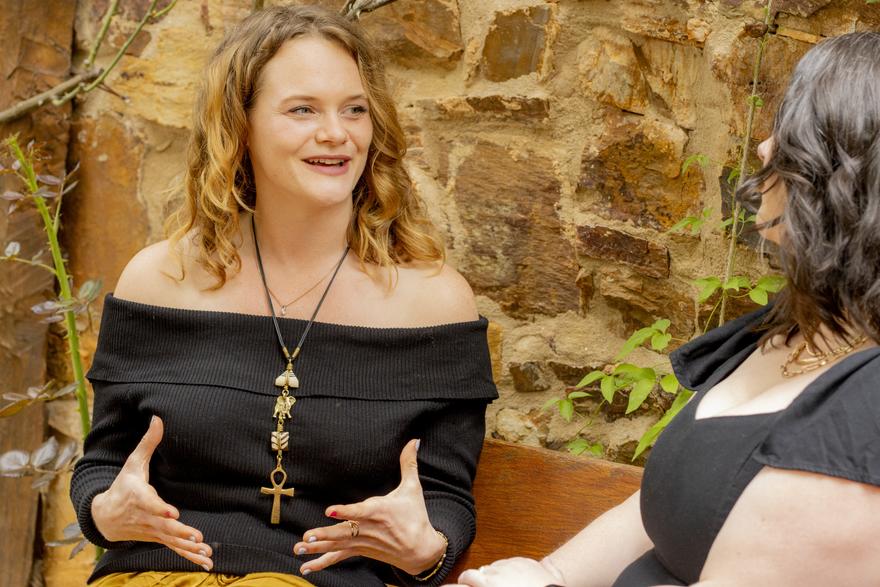
Transformational coaching certification trains you to work at a different level than most ordinary coach training. Rather than teaching you to help clients set goals and build action plans, it trains you to help people recognize who they already are, beneath the roles, fears, and self-concepts they've accumulated. With that recognition, real and lasting change follows on its own.
"I've spent well over a decade training hundreds of coaches, and I've watched what happens when a program teaches technique without depth. Transformational coaching certification actually equips you to create far deeper awareness. Here's what makes it different from every other coach training path." Christi Byerly, MCC
What Kind of Coaching Is This, Really?
At Awaken, we don't start with a niche. Executive coaching, workplace coaching, health coaching: these are marketing labels people put on top of coaching, not the thing itself. The core of coaching is a way of being with another person.
"Coaching is a way of being with people which is curious. We're listening, present, and grounded. We see their strengths instead of looking for their pathologies. When you get to the level of who they think they are, their self-concept, people start to experience themselves and their world differently, and their actions, relationships, and choices naturally shift." Christi Byerly, MCC
Getting to that level, the level of experiencing the Self as part of a whole, is what Awaken calls spiritual coaching. Not spiritual in the religious sense: spiritual in the sense of listening beneath surface thoughts, feelings, and behaviors to the assumptions and beliefs that shape how someone experiences themselves and their part in a world we're all creating together. Something larger holds both coach and client in that process, whether you call it Love, Life, Peace, or Spirit. This is the ground a coach learns to stand on here, alongside a client, in the world they're shaping together.
I explore this same distinction, transformational coaching versus performance coaching, and why real change begins with alignment rather than tools or outcomes, in the video below.
Not Fixing: The Belief Underneath Everything We Teach
Most coaching language, even well-intentioned language, treats transformation as something the coach does to a client: reframing their limiting beliefs, rewriting their story, helping them "become their best version." Awaken teaches something different.
Transformation isn't the coach changing who's in front of them. It's helping someone come home to who they already are, and then supporting them in bringing that way of being into wherever they work and live. You aren't trying to fix your client. You're learning to see them so clearly, and to hold space so steadily, that they can find their own way back to themselves.
This distinction shapes everything else in the training: how you listen, what you notice, what you resist the urge to do.
What This Training Actually Equips You to Do
Most transformational coaching programs describe their curriculum in terms of topics: psychology, emotional intelligence, mindfulness, goal theory. At Awaken, we train specific capacities, each one a doorway into how transformation actually happens for a client.
1. Holding Sacred Space Holding sacred space means cultivating a field of presence where a client's whole self, not just their story, is welcome. Most people carry parts of themselves they've learned to keep out of view. Transformation starts here, in the moment a client senses that nothing needs to be hidden or managed, and something in them finally settles enough to let the real work begin.
2. Listening at Multiple Levels Awaken coaches listen beyond what's visible on the surface, context, behaviors, feelings, thoughts, into the deeper layers underneath: a client's beliefs, identity, purpose, and the larger sense of the world they're living from. Transformation happens when a client realizes their world was constructed from beliefs they never chose consciously, and that it can be constructed differently.
3. Trusting Silence as an Active Ally Silence isn't empty space to fill. Left alone, it becomes an invitation into a client's deeper sense of knowing, and it's often in that quiet that the first real movement toward transformation begins.
4. Receiving the Client Beyond Understanding A coach's presence shows a client that all of them, light and shadow, is received without needing to be evaluated, strategized over, or even understood. A client can't transform while still hiding parts of themselves from themselves. Being fully received is often what makes it safe to stop hiding.
5. Noticing the Soul's Metaphors Metaphors are powerful transformational tools. They let a client bridge what they know but can't yet say in ordinary language, carrying meaning that belongs to them alone and can't be handed to them from outside.
6. Midwifing the Unspoken This is where awareness gets evoked, gently naming subtle themes, patterns, or emotions a client hasn't yet spoken, without needing to be right about them. Awareness is the vital first step; transformation can't reach a belief a client can't yet see.
7. Allowing Emotion to Guide Emotion is a doorway. Following it, rather than managing it, leads a coach and client together toward the identity and belief work where real transformation takes hold.
8. Letting Coaching Be Art Sometimes what a client needs to transform can't arrive through conversation alone. Inviting intuition, poetry, imagery, artwork, music, and movement into the coaching container gives a client access to a portal words can't reach on their own.
9. Evoking the Wise Witness Within This is about helping a client connect with the part of themselves where all things are possible and already known, the calm center that can hold space for their own transformation, so they come to trust that place in themselves rather than borrowing a coach's certainty.
10. Rooting in The Great Love Every session rests on a deep knowing that something larger, Love, Life, Peace, Spirit, whatever a client calls it, holds both coach and client. That knowing shapes every word, every silence, every question, and quietly makes room for whatever transformation is ready to happen.
These are the same practices woven through Awaken's philosophy of coaching, taught and practiced in every cohort, not add-on modules bolted onto a standard coaching curriculum.
Why Training Here Changes You Too
Something else happens in transformational coaching certification that most programs don't talk about: you don't just learn to facilitate transformation in others. You go through it yourself.
When I started training coaches, I believed what most coach training believes: that people come to us because something needs fixing, and our job is to help them get better. I built curriculum around that belief for years, teaching other schools how to move clients from where they were to somewhere improved.
The first few schools I wrote for eventually told me the same thing, in different words. They didn't think their faculty could train coaches to go as deep as I wanted to take them. Stick to the basics, they said. Keep it teachable.
I couldn't stick to the basics, because I no longer believed the premise underneath them. Somewhere in those years of training coaches, I'd stopped believing that people needed to be fixed at all. I'd started to trust that everyone I sat across from was already whole, and that the real work was helping them remember that, not helping them become someone better. That shift didn't happen because I decided to think differently. It happened the way it happens for the coaches we train now: through the same presence, the same listening, the same trust in wholeness that we teach here.
That belief didn't fit anywhere I'd trained. So I built Awaken to hold it.
You cannot teach presence you haven't practiced. You cannot hold space for someone else's whole self if you haven't been received that way yourself. That's why certification here isn't only about acquiring skills. It's an experience that changes how you see yourself, your clients, and the work, before you ever sit across from your first paying client.
What Graduates Talk About Afterward
People often come to Awaken expecting to learn certification requirements and coaching techniques. That's not usually what they talk about afterward.
When we read testimonials from our graduates, the conversation is rarely about skills. It's about who they became. They describe showing up differently in their marriages, with their children, in rooms where they used to hold back. They describe relating to the people in their lives in ways they didn't know were available to them before this work.
That's not a side effect of the training. It IS the training, showing up in the words graduates speak once they're on the other side of it.
And it doesn't end when the certification does. Our cohorts tend to stay close long after graduation, meeting regularly, holding each other the way they learned to hold their clients. What starts as a training program becomes a relationship that keeps shaping how they live.
Why Transformation Happens in Small Cohorts
Being truly seen requires a kind of intimacy that a large cohort structurally cannot offer. This is why Awaken trains in small, intimate groups rather than the large-format cohorts common across the industry.
When a cohort is small enough, you are not one of two hundred names on a roster. Your faculty and your peers can actually notice you: your patterns, your growth edges, the moments you're holding back or leaning in. That noticing is not a nice extra. It's the mechanism. The same quality of presence you're learning to offer a future client is the quality of presence you receive throughout your own training.
What Training Looks Like
Awaken offers two paths to ICF-accredited transformational coaching certification, both integrating spiritual, transformational, depth, and empowerment coaching into a single unified framework.
All-in-One Virtual Coach Certification: 16 weeks, 125 ICF training hours, cohorts of 12. Delivered live and online, with faculty joining from across four continents. Runs twice a year, in March and September.
Spain Retreat: Two weeks, immersive, set along the Camino de Santiago, 125 ICF training hours, followed by ongoing community support. Suited to coaches brand new to the field and to credentialed coaches pursuing their MCC alike. Runs once a year, between May and July.
Both paths are accredited at ICF Level 1, Level 2, and Level 3, and both are genuinely all-in-one: the 125 hours of ICF education, along with mentor coaching, are fully delivered within the program itself, not sold back to you in pieces afterward. From there, the path to your ICF credential is a matter of logging your own client coaching hours and sitting the ICF exam, the parts of the process that happen through your own practice rather than through coursework.
Exactly what that path looks like after certification depends on where you are in your own coaching journey. If you're weighing your options for what comes next, Your ICF Credential Is the Floor, Not the Ceiling walks through what to consider. And if you're still comparing certification paths more broadly, Coach Certification Training: The Complete Guide covers what to look for across the wider landscape, beyond the transformational coaching focus of this piece.
What Other Transformational Coaching Programs Often Miss
Accreditation across the coaching industry is more confusing than it looks from the outside. Some programs advertise ICF accreditation while only their entry-level course actually qualifies, with mentor coaching sold as a separate add-on you need before you can apply for a credential at all. Others bundle several stages together in ways that make it hard to tell what you're actually walking away with until you're partway through.
There's a similar gap around the word "transformational" itself. Plenty of programs use it in their marketing while teaching the same goal-setting and mindset-reframing techniques found in standard life coaching, just relabeled. Shifting a client's mindset can genuinely help, but it only takes someone part of the way. Real identity-level work goes further than how someone thinks; it changes how a coach listens, not just what a coach says, and it rarely shows up as a line item in a curriculum. It has to be trained into the coach directly, through presence practiced in community, not through a module.
Faculty depth and mentor coaching quality vary just as widely. A program is only as deep as the people teaching it, and "meet our faculty" pages don't always reflect how much real coaching experience, or how much of their own inner work, faculty have actually done. Awaken's faculty span four continents, each running thriving coaching practices of their own, teaching from lived depth rather than borrowed theory.
Questions Worth Asking Any Coaching School
Before enrolling anywhere, the real question underneath all the others is simple: will this actually equip you to facilitate transformation in your future clients, or just teach you to run a session? These are worth asking directly:
- Does the training go deep enough to change how you listen, not just what you say? A program that stays at the level of technique will hand you scripts. One that goes deeper will change your presence, which is what a client actually feels sitting across from you.
- Will you graduate able to work with a client's emotions, silence, and metaphors, or only their stated goals? Facilitating real transformation means knowing what to do when a client goes quiet, gets emotional, or reaches for an image instead of an explanation, not just when they hand you a clear objective.
- Is mentor coaching included, or a separate cost you'll need to add later? Mentor coaching is where you learn to apply depth work with real clients, under real feedback, not just where you pick up hours for a credential.
- What is the cohort size, and how much direct contact will you have with faculty? You can only learn to hold space for a client as fully as you've been held yourself during training.
- Have the faculty done their own inner work, or are they teaching techniques they haven't personally lived through? You cannot facilitate a transformation you haven't gone through.
- Does the program's accreditation actually cover what you need for your credential, or only part of it?
- What happens after certification? Is there an ongoing community to keep deepening this work, or does support end when the course does?
A program that can answer these clearly, without vague marketing language standing in for a real answer, is one worth taking seriously.
Where Transformation Multiplies
Individual sessions aren't the only place this work happens. Transformation tends to multiply in a group setting: we're far more likely to keep a promise made to a group than one made only to ourselves, and group work leverages human connection to create shifts that are often deeper and more sustainable than working alone. You can read more about that multiplier effect in The Transformational Group Coaching Framework, which explores the five elements that make group coaching a genuine extension of this same depth-first approach, not a watered-down version of it.
For many Awaken graduates, group coaching becomes the natural next step after certification. Our Group Coaching Certification Course builds on the same foundation to help you design and facilitate transformational group experiences of your own.
Find Your Path Into Transformational Coaching Certification
If this way of working calls to you, we would love to meet you. Explore our ICF-accredited Coach Certification Training and find out which pathway fits where you are.
We hold regular Q&A calls where you can meet faculty and Christi, ask honest questions, and get a real sense of how we work. Every prospective student has that conversation before enrolling. Join a free Introduction Call to find a time that works for you.
Frequently Asked Questions
What is transformational coaching? Transformational coaching is an approach that works at the level of a client's identity and self-concept. Rather than focusing on goals and action plans, it helps clients recognize who they already are beneath accumulated beliefs and roles, so that changes in behavior, relationships, and choices follow naturally.
What's the difference between transformational coaching and life coaching? Life coaching can center on goals and action plans to facilitate a change in work or life. Transformational coaching works at the level of identity and self-concept, helping a client recognize who they already are so that changes in behavior, relationships, and choices follow on their own, rather than being planned step by step.
What techniques does transformational coaching use? Awaken's approach centers on presence-based practices rather than scripted techniques: holding sacred space, listening at multiple levels, working with silence, following a client's own metaphors, and letting emotion guide the work, all rooted in a belief that clients are already whole.
Is Awaken's transformational coaching certification ICF-accredited? Yes. Both the All-in-One Virtual Coach Certification and the Spain Retreat are accredited at ICF Level 1, Level 2, and Level 3, preparing graduates to pursue ACC, PCC, or MCC credentials.
How long does transformational coaching certification take? The All-in-One Virtual program runs 16 weeks and includes 125 ICF training hours. The Spain Retreat delivers the same 125 hours over two immersive weeks, followed by ongoing community support.
Can I train as a transformational coach online? Yes. The All-in-One Virtual Coach Certification is delivered live online over 16 weeks, with faculty joining from across four continents, and carries the same ICF accreditation as the in-person Spain Retreat.
Do I need a spiritual background to train as a transformational coach at Awaken? No. Our approach is often called spiritual, but it's practical at its core: helping people listen beneath surface thoughts and feelings to the beliefs and purpose underneath. Curiosity and openness matter far more than any particular background or belief system.
What makes Awaken's transformational coaching training different? Training happens in small, intimate cohorts with faculty from across four continents, built around the belief that coaches don't fix or change clients, they help them come home to who they already are. Coaches also go through their own transformation during training, beyond just skills acquisition.
Can I use transformational coaching training for executive coaching? Yes. Awaken doesn't train you into a niche like executive, workplace, or health coaching, for example. It trains a way of being with people, presence, deep listening, and identity-level work, that you then bring into whatever context you coach in, executive settings included.
About the Author
Christi Byerly, MCC, is the founder and CEO of Awaken Coach Institute. Her coaching process motivates you to build a community of empathy and grace around you, and to live your mission as part of something bigger than you are. With over 17 years of coaching experience, Christi has trained hundreds of new coaches and maintains a thriving practice focused on depth, presence, and authentic transformation.

0 comments
Leave a comment
Please log in or register to post a comment